
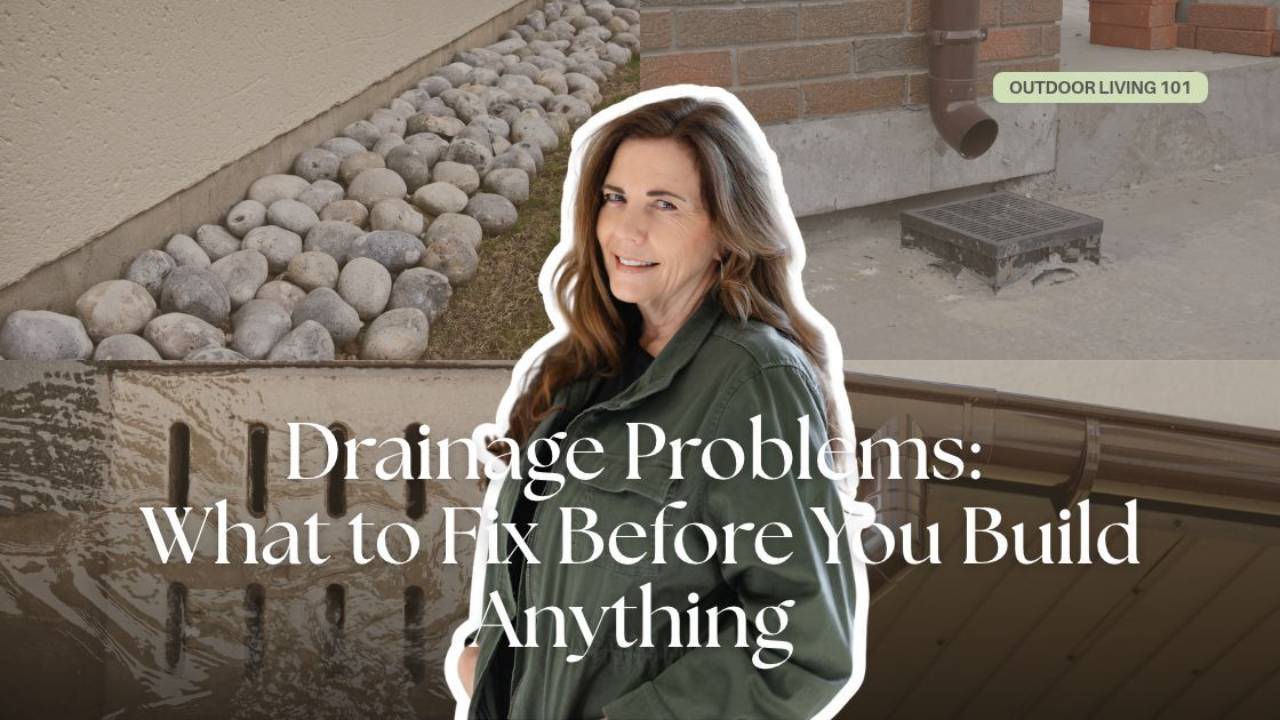
Drainage Problems: What to Fix Before You Build Anything
Oct 27, 2026You’ve picked out your pavers, your pergola, even your outdoor kitchen. But if your yard has a drainage problem and you build on top of it, that beautiful new space can turn into a very expensive mistake.
Water is one of the most common reasons backyard projects fail. Here’s how to spot drainage problems, understand what causes them, and know what to fix first.
Why Drainage Comes First
Drainage isn’t the exciting part of a remodel. Nobody posts a photo of their new French drain. But it’s the step that protects everything else you’re about to spend money on.
Water always follows the path of least resistance. If you build without understanding where it goes, it will find its own way, often under your patio, against your foundation, or into your neighbor’s yard.
Unresolved drainage problems can cause:
- Pooling water and soggy, unusable areas
- Cracked, sinking, or shifting patios and walkways
- Erosion around walls and slopes
- Water damage near your home’s foundation
- Dead plants and constant replanting
Fixing these problems after construction usually means tearing out what you just built.
Signs of a Drainage Problem
Here’s what to look for in your yard right now:
- Standing water that lingers a day or more after rain
- Soggy or muddy areas that never seem to dry out
- Soil erosion, like exposed roots, gullies, or washed-out spots
- Water pooling against the house or running toward the foundation
- Stains, cracks, or moisture on the lower parts of walls or the foundation
- Moss or mold in areas that stay constantly damp
- Downspouts that dump water right next to the house
The best time to check is during or right after a rainstorm. Walk your yard and watch where the water goes. It will tell you more than any guess.
Common Causes of Drainage Problems
- Poor grading: the ground slopes toward your house instead of away from it
- Compacted soil: water can’t soak in, especially after heavy construction or on clay soils
- Roof runoff: gutters and downspouts that aren’t directed away from the house
- Too much hardscape: patios and paved areas that block absorption and increase runoff
- Runoff from neighboring properties or slopes
What to Fix Before You Build
Here are the most common solutions, and why they belong at the start of your project:
1. Regrading. Adjusting the slope of your yard so water flows away from your home and structures.
2. Extended downspouts or drain lines. These carry roof water well away from the foundation.
3. French drains. A buried, perforated pipe in a gravel trench that collects and redirects underground water.
4. Catch basins and channel drains. These capture surface water, especially around patios and low spots.
5. Dry wells or rain gardens. These help water soak into the ground instead of running off.
6. Retaining wall drainage. Walls need proper drainage behind them, or water pressure can damage them over time.
The right solution depends on your soil, slope, and climate, so a professional assessment is worth every dollar.
Who to Call and What to Ask
If you suspect a drainage issue, bring in a landscape designer, a drainage specialist, or an experienced contractor before you finalize your plans.
Ask them:
- Where is the water coming from, and where is it going?
- Will the proposed design change how water moves across my property?
- Do I need grading or drainage work included in the scope?
- Will this affect my neighbors, and are there local rules about that?
- Is the drainage work covered under a permit?
Then make sure drainage is written into your contract. If it isn’t in the scope, it can show up later as a change order.
The Bottom Line
Water doesn’t care about your design. Look for signs of poor drainage, understand the cause, and fix it first, before the patio, before the pergola, and before the plants. Handle drainage at the start, and you protect everything you build after it.

