
Best BBQ Equipment for Outdoor Kitchens (What to Know Before Buying)
May 13, 2026SECTION 1: START WITH YOUR COOKING STYLE
Before you even look at a single grill, I want you to ask yourself one question: How do you actually cook?
Are you someone who loves to sear steaks at high heat? Do you smoke brisket low and slow on weekends? Are you feeding a crowd regularly, or is this mostly for weeknight dinners and the occasional gathering?
The reason this matters is that the answer completely changes what equipment makes sense for you. A high-BTU built-in gas grill is perfect for the person who grills three times a week and wants speed and convenience. But if you're a BBQ enthusiast who wants that deep smoky flavor, you may want to budget for a smoker or a charcoal component alongside your gas grill.
There's no wrong answer — but there is a wrong grill for your lifestyle. Know that before you spend a dime.
[PRODUCTION NOTE — Katrina: New slide — "Step 2: Built-In vs. Freestanding"]
SECTION 2: BUILT-IN VS. FREESTANDING
This is one of the biggest decisions you'll make, and it comes down to one thing: are you building a permanent outdoor kitchen, or do you want flexibility?
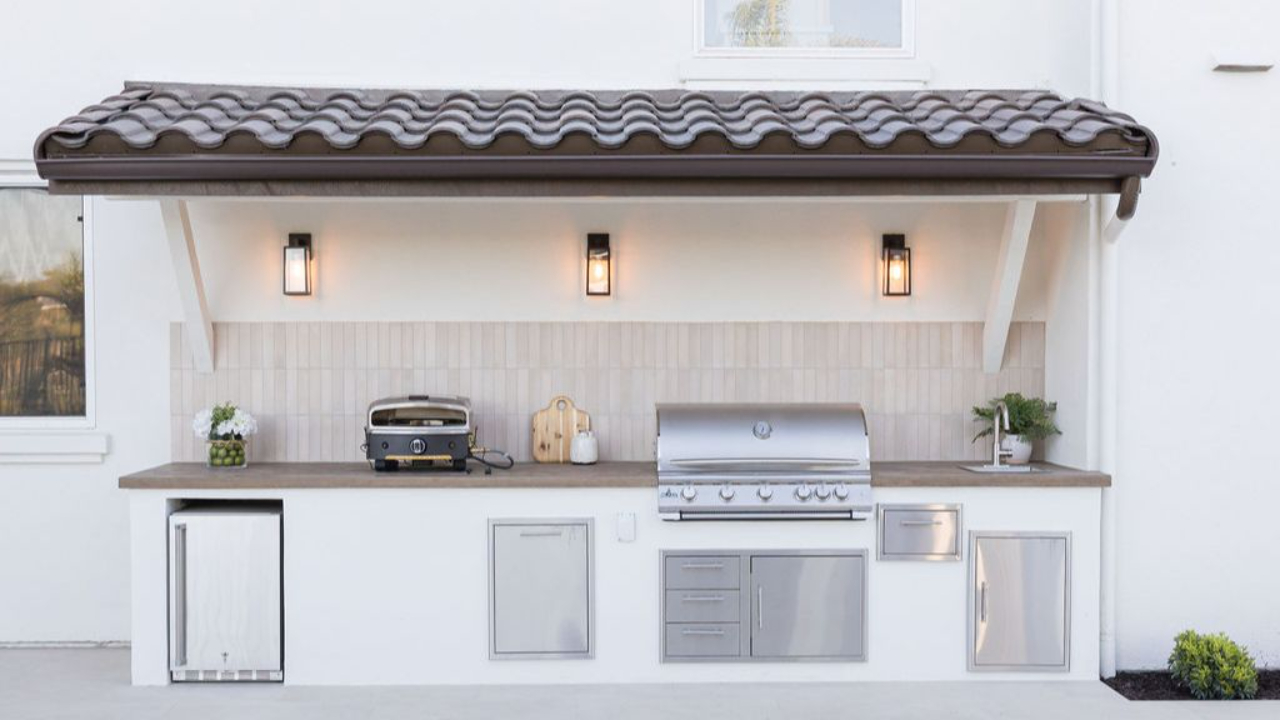
Built-in grills are designed to drop into a countertop or BBQ island. They look incredible, they're seamless, and they add real value to your home. But they're a commitment. Once it's in, it's in.
Freestanding grills are more versatile — you can move them, replace them more easily, and they tend to cost less upfront. But they don't give you that polished, custom-kitchen look.
My recommendation for most of my clients is this: if you're building a true outdoor kitchen — meaning you have a countertop, a BBQ island, cabinetry — go built-in. You'll thank yourself later. If you're not ready for that level of commitment, a high-quality freestanding grill on a patio can absolutely hold its own.
[PRODUCTION NOTE — Katrina: New slide — "Step 3: Key Features to Prioritize"]
SECTION 3: KEY FEATURES TO PRIORITIZE
Okay, so once you know your cooking style and your setup, here are the features that actually matter when you're comparing models:
BTU output — This is the heat power of your grill. More isn't always better. What you want is even heat distribution, not just a high number.
Material and construction — Look for 304 stainless steel. It's marine-grade, it holds up to the elements, and it's what separates a grill that lasts 15 years from one that rusts in three.
Burner configuration — Think about how many independent zones you want. Having a dedicated sear zone or a rotisserie burner gives you so much more versatility.
Ignition system — This sounds small, but a reliable ignition is something you'll care about every single time you cook. Cheap ignitions fail. Ask about it.
And finally — warranty. A quality grill should come with at least a 5-year warranty on the burners. If it doesn't, keep shopping.
I want to give you a quick reality check on price ranges, because this is where expectations and reality often don't line up.
In the $500–$1,500 range, you can find solid freestanding grills with good construction — great for someone just starting out.
In the $2,000–$4,000 range, you're getting into quality built-in territory — better materials, better performance, more features.
$5,000 and above is where you're looking at professional-grade equipment — brands like Lynx, Hestan, or DCS — and honestly, for clients who entertain regularly and want their outdoor kitchen to perform like a real kitchen, this investment makes complete sense.
The biggest mistake I see? People budgeting for the grill but forgetting to budget for installation, surrounding cabinetry, and gas line hookups. Those costs add up fast, so plan for the full picture.
SECTION 5: QUICK RECAP / CHECKLIST
Before I let you go, here's your quick checklist before you buy any BBQ equipment:
- Know your cooking style first
- Decide: built-in or freestanding?
- Confirm 304 stainless steel construction
- Check the warranty — minimum 5 years on burners
- Budget for the full installation, not just the grill
Print that out, screenshot it, save it — because these five things will save you from a very expensive do-over.

